
Who is Jesus? What John the Baptist Reveals About the Identity of Christ
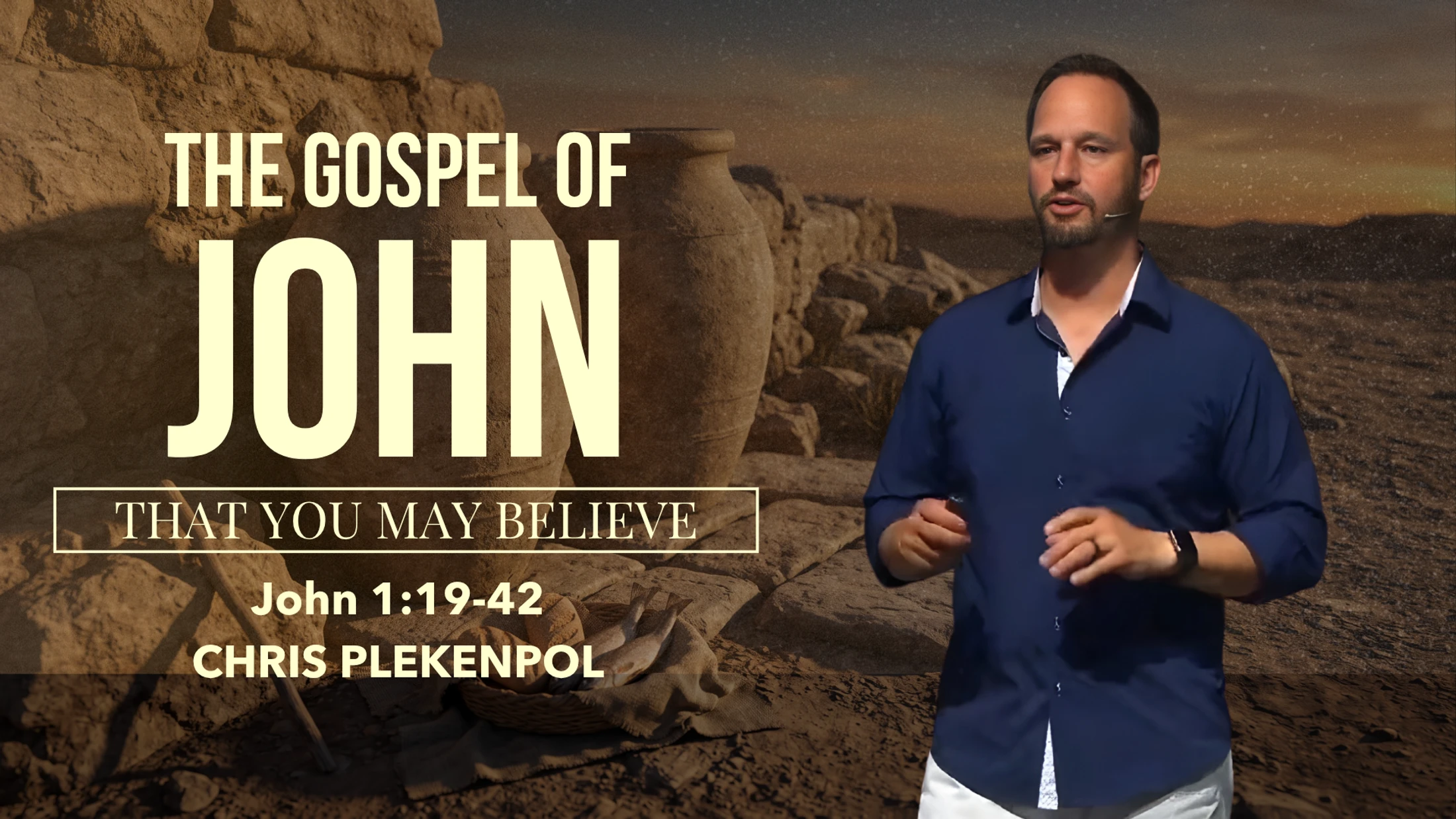
Who Is Jesus? What John the Baptist Reveals About the Identity of Christ
The Gospel of John was written so that you may believe Jesus is the Son of God, and that by believing, you might have life in His name. But before Jesus steps fully onto the scene, someone else shows up first. John the Baptist arrives as a witness, a forerunner, a voice pointing to something far greater than himself. Understanding who John was, and what he said, helps us understand who Jesus truly is.
Why Did John the Baptist Matter?
John the Baptist was not just a colorful figure from ancient history. He was the person who gave credibility to Jesus before Jesus had publicly revealed Himself. He didn't testify about himself. He pointed to someone else entirely.
Think of it like a letter of recommendation. Even the most qualified person still needs someone to vouch for them. John was that voice. And because everyone respected John, his testimony carried real weight.
Who Were the People Questioning John?
When religious leaders came out to question John, they represented two major factions of Jewish leadership.
The priests and Levites inherited their roles through the tribe of Levi. They had compromised God's Word over time, often aligning with Roman power for political convenience. They were more flexible in their interpretation of Jewish law.
The Pharisees came from the tribe of Judah. They were uncompromising toward God's law and constantly pushed back against the priests and Levites. They believed God's Word did not expire and added extra rules to make sure no one accidentally broke it.
Both groups made up the Sanhedrin, the 71-person council that would eventually decide Jesus should die. But in this moment, they were simply asking questions about John.
What Did John Say About Himself?
The religious leaders asked John three direct questions. Are you the Christ? Are you Elijah? Are you the prophet Moses spoke about?
To each one, John said no.
He answered with a quote from Isaiah: "I am the voice of one crying out in the wilderness, make straight the way of the Lord." He was describing his role, not his identity. His job was to prepare the road for the King who was coming.
In ancient times, when a king was about to travel, workers would fill in potholes, level steep hills, and smooth out the road. John was doing the spiritual version of that. He was calling people to get their lives straight before the King arrived.
What Does It Mean to Point Away from Yourself?
John's identity was entirely wrapped up in pointing to Christ. He had thousands of followers. He was beloved by both the Pharisees and the priests. He called out corruption. He lived with radical integrity. And yet, when asked who he was, he said he was not even worthy to untie the sandal of the one coming after him.
That is a stunning level of humility from someone who had every reason to take credit.
There is something in all of us that wants recognition. When someone else gets the credit for work we did, something rises up inside. John had every opportunity to make himself the center of the story, and he refused every time.
His example challenges us. Our identity, no matter what we do for work or where we live, should be rooted in pointing people to Jesus. Not in building our own reputation, but in making His name known.
What Did John Say When He Saw Jesus?
When Jesus walked toward Him, John declared: "Behold, the Lamb of God, who takes away the sin of the world." - John 1:29
That statement is loaded with meaning from two major Jewish traditions.
The Passover Lamb
In Exodus, before the Israelites left Egypt, God instructed each family to take a spotless lamb, slaughter it, and put its blood on the doorposts of their home. When the death angel passed over, every home covered by the blood was spared.
The lamb lived in the house for a week before it was killed. Families, especially children, would grow attached to it. And then it was sacrificed. It did not resist. It went willingly.
Jesus is that lamb. He came, lived among us, and went to the cross without resistance. As Isaiah wrote, He was led like a sheep to the slaughter.
The Scapegoat of Yom Kippur
On the Day of Atonement, the high priest would take two goats. One was sacrificed on the altar. The other, the scapegoat, had the sins of all Israel placed on it and was sent into the wilderness, never to return. The sins were gone. There was no condemnation left.
Jesus did not send sin to the wilderness. He took it further. He took the full weight of sin and wrath into death itself. On the cross, He cried out: "My God, my God, why have you forsaken me?" - Matthew 27:46
That is the only moment in the Gospels where Jesus does not call God "Father." He experienced separation from God. He experienced what our sin deserved so that we would never have to.
Jesus Died for the Broken, Not Just the Good
We tend to think grace is for people who were mostly good. But Scripture says something different.
"God demonstrates His own love for us in this: While we were still sinners, Christ died for us." - Romans 5:8
He did not die for the righteous. He died for enemies. He died for the broken, the wicked, and the ones who wanted nothing to do with Him. That is the depth of what it means to be the Lamb of God who takes away the sin of the world.
How Is Jesus Revealed to Us Today?
John testified that he saw the Holy Spirit descend on Jesus like a dove and remain on Him. God had told John in advance: the one on whom the Spirit descends, that is the one.
But here is what matters for us. John said he did not know Jesus until the Holy Spirit revealed it to Him. And that is exactly how it works for every person who comes to faith.
No argument, no sermon, and no debate can convince someone that Jesus is the Son of God. That recognition comes from the Holy Spirit. When Peter declared, "You are the Christ, the Son of the living God" (Matthew 16:16), Jesus responded: "Flesh and blood did not reveal this to you, but my Father who is in heaven." - Matthew 16:17
Faith is not something we manufacture. It is a gift. Salvation is a free gift of God so that no one can boast about having believed harder or better than someone else.
What Is the Holy Spirit Revealing to You About Jesus?
If you have been a Christian for years, there is still more to discover. The depth, height, and breadth of His love never runs out. Growing in your knowledge of Jesus should always lead to growing in your worship of Him.
If you are not yet a Christian, or you have been around church without ever making a personal decision, the question is simple. What is the Holy Spirit revealing to you about Jesus right now?
He has already chosen to go to the cross on your behalf. He did not stay in comfort. He came out, took the full weight of what you deserved, and offered you life in return.
Life Application
This week, look for one specific moment where you can point someone else toward Jesus instead of drawing attention to yourself. It might be giving credit to God in a conversation, sharing something He has done in your life, or simply choosing humility when you want recognition. John the Baptist had every reason to make himself the center of the story, and he refused. That same posture is available to you.
Ask yourself these questions as you go into the week:
- Is my identity built around making Jesus known, or around being known myself?
- Do I truly believe that Jesus took on the full weight of my sin, not just the parts I am comfortable admitting?
- What is the Holy Spirit revealing to me about Jesus right now, and am I paying attention to it?
- Is there someone in my life who needs me to be a "John the Baptist" for them, someone who simply points them toward Christ?
The whole story of John the Baptist is a story about becoming less so that Jesus becomes more. That is not a one-time decision. It is a daily one.