
What Does It Mean That Jesus Is The Word?
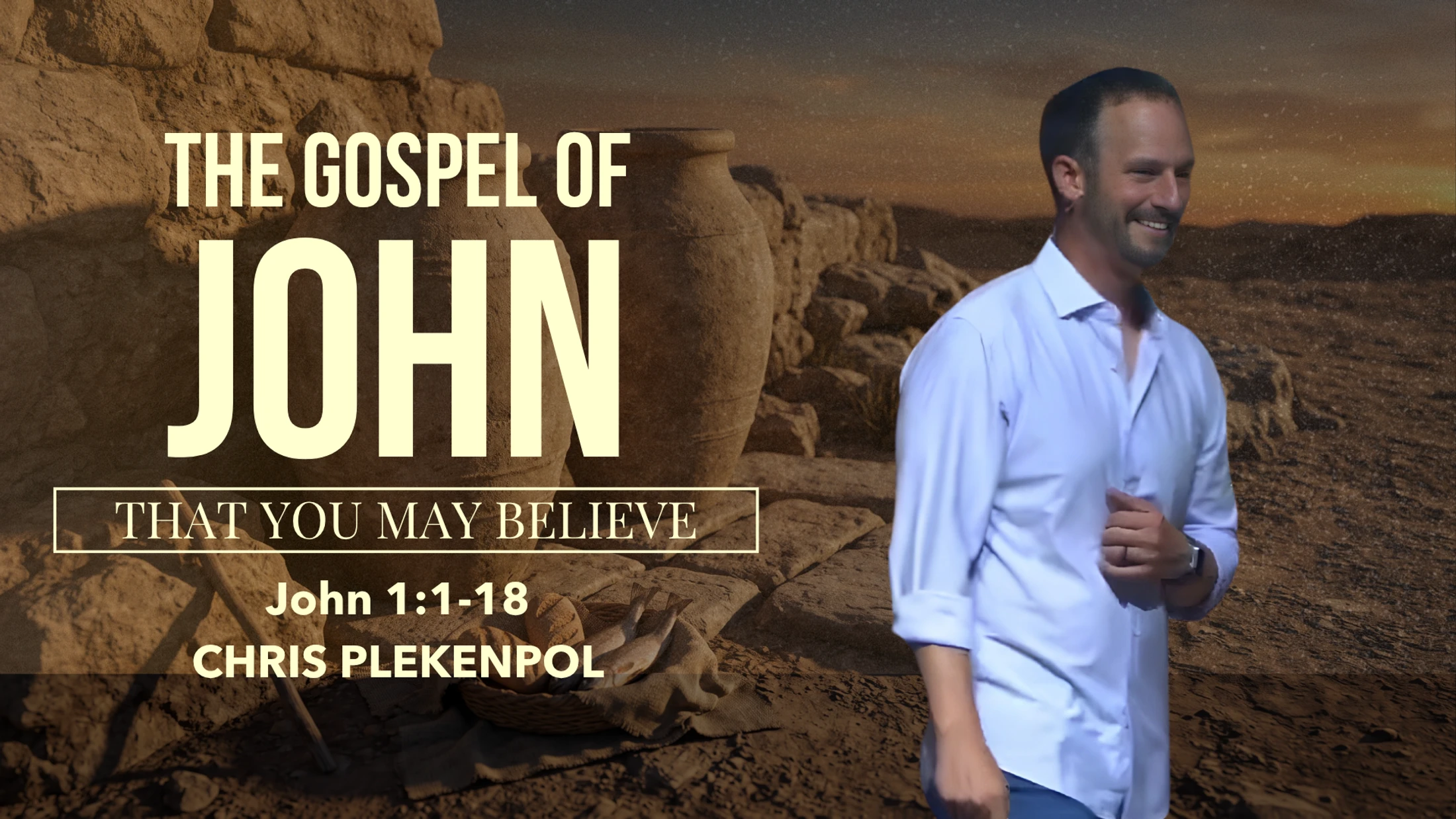
What Does It Mean That Jesus Is the Word?
A lot of us are going through life on autopilot. We are awake, functioning, having conversations, but not really present to what matters most. This idea from John chapter 1 cuts right to the heart of that. Jesus, the Word of God, did not stay distant. He moved in. And that changes everything.
What Is "The Word" in John 1?
John opens his Gospel with one of the most striking statements in all of Scripture:
"In the beginning was the Word, and the Word was with God, and the Word was God." - John 1:1
The word translated here as "Word" is the Greek term Logos. To a first-century audience, this carried enormous weight. It pointed to ultimate truth, reason, and the foundation of all that is right and real.
In Greek philosophy, there were two dominant responses to the Logos. The Epicureans said since we cannot fully understand it, we should just enjoy life and pursue pleasure. The Stoics said life is suffering, so we should discipline ourselves and need nothing. Neither camp had a satisfying answer.
The Jewish perspective saw the Word as the voice that spoke to Moses, the still small voice that came to Elijah. Everyone agreed something like the Logos existed. But John is about to say something that changes the entire conversation.
How Long Has Jesus Existed?
John makes it clear that the Word was not created. He has existed from eternity past.
"All things were made through him, and without him was not anything made that was made." - John 1:3
Everything that exists came through the Word. He is not a product of creation. He is the source of it. He is also described as life and light, the one who gives breath, spiritual life, and the ability to distinguish good from evil.
That kind of eternal existence is hard to wrap our minds around. But it matters because it means the one offering to move into your life is not a newcomer. He has known what is true, what is right, and what is good since before time began.
Why Did People Reject Jesus When He Came?
"He was in the world, and the world was made through him, yet the world did not know him. He came to his own, and his own people did not receive him." - John 1:10-11
Jesus came as a Jewish man, born into the line of Judah, tracing back through Abraham. His lineage was exactly what the Jewish people had been waiting for. And yet, many still rejected Him.
This was not just a first-century problem. People today resist the Word for similar reasons. Some have seen Christians who seemed extreme or hypocritical and want nothing to do with it. Others are skeptical by nature. And if we are honest, many of us resist because we know that letting the Word in means things will have to change. We want the comfort of God's love without the disruption of His lordship.
What Happens When You Receive Jesus?
"But to all who did receive him, who believed in his name, he gave the right to become children of God, who were born, not of blood nor of the will of the flesh nor of the will of man, but of God." - John 1:12-13
Receiving Jesus is not complicated. It starts with believing in His name. And the result is extraordinary. You become a child of God. Not through heritage, not through effort, not through earning it, but through God Himself.
There is a deep need in every person to hear a Father say, "I love you. I am proud of you. You are mine." Whether you are four years old or eighty-four, that need does not go away. The Word offers exactly that kind of relationship, and it is better than even the best earthly Father could provide.
What Does It Mean That the Word Became Flesh?
"And the Word became flesh and dwelt among us, and we have seen his glory, glory as of the only Son from the Father, full of grace and truth." - John 1:14
This is the verse that would have stopped a Jewish audience cold. The Word, the eternal Logos, taking on human flesh? That was unthinkable.
But the word translated "dwelt" can also mean "tabernacled." In the Old Testament, the tabernacle was the portable structure where God's presence resided among His people as they wandered in the wilderness. It sat right in the middle of the camp. God was not distant. He was in their midst.
Jesus did the same thing. He did not observe humanity from a safe distance. He got dirty. He traveled. He ate meals with people. He moved into the neighborhood.
What Does Grace Upon Grace Actually Mean?
"For from his fullness we have all received, grace upon grace." - John 1:16
The law, given through Moses, reveals how far short we all fall. The moral law alone, the Ten Commandments, exposes the darkness in every human heart. Anger, jealousy, dishonesty, pride. None of us escape it.
But the law was never the final word. Grace is.
Grace upon grace is like waves on the ocean. They do not stop. The ocean never runs out of waves, and God never runs out of grace. No matter what you have done, no matter how far you have drifted, there is more grace available to you than you have ever needed.
"For the law was given through Moses; grace and truth came through Jesus Christ." - John 1:17
How Does Jesus Moving In Actually Change Your Life?
Think about a city that has seen better days. Storefronts boarded up. Population declining. The kind of place people drive through without stopping. Now imagine a major institution deciding to relocate there. Suddenly, traffic patterns change. Infrastructure gets upgraded. The whole city is transformed.
That is what happens when Jesus moves in.
A lot of us have areas of our lives that look like that rundown city. Broken relationships. Patterns we cannot seem to break. A sense that the best years are behind us. We have gotten so used to the brokenness that it feels normal.
When the Word takes up residence in a life, He does not leave things the way He found them. He starts changing habits, healing relationships, and rebuilding what was broken. That process is uncomfortable. It requires letting go of things we have grown used to. But the transformation He brings is real.
Receive or Reject: The Only Two Options
John does not leave room for a middle ground. The response to the Word is either reception or rejection. There is no option to take Jesus on the weekends while keeping the rest of life unchanged.
This is not meant to be a burden. It is an invitation. The most powerful, eternal, grace-filled being in existence is saying, "I want to live in you. I want to be your Father. I want to transform you from the inside out."
For those who have already placed their faith in Christ, this is still a daily call. The Word is always inviting you to step out of comfort, to reach the people around you, and to stop going through the motions of faith without actually living it.
For those who have never made that decision, the starting point is simple. Believe in His name. Receive Him. That is where it begins.
Life Application
This week, identify one area of your life where you have been "droning," going through the motions without truly engaging. It might be your faith, a relationship, a habit, or a pattern you have accepted as just the way things are. Bring that specific area to God in prayer and ask Him to move in and begin transforming it. Do not just observe. Receive.
Ask yourself these questions as you reflect:
- Am I truly receiving the Word, or am I keeping Him at arm's length because I am afraid of what He might change?
- Is there an area of my life I have accepted as broken that I have stopped believing God can restore?
- What would it look like this week to actively believe in His name rather than just acknowledge it?
- Am I living as a child of God, or am I still carrying the weight of guilt and shame that grace has already covered?
The Word became flesh and moved into the neighborhood. He is not asking you to clean yourself up first. He is asking you to open the door.